The lovely Lancashire heeler
THERE is nothing fancy about the Lancashire Heeler; with his easy care coat, small size and versatility, he has stepped from the farm into the show ring virtually unchanged. Sometimes known as the Ormskirk Heeler, the breed has been around in the North-West of England for well over a hundred years. Heelers – also known as nip’n’duck dogs – were once a familiar sight throughout Britain. Small, brave dogs, they worked in the busy towns and docks, diving through crowds where larger breeds could not go. They moved the cattle and sheep by nipping at their heels to drive them on and would flatten themselves to the ground to avoid any kicks, hence their nickname. They were used for short journeys such as from grazing areas to markets and then to the slaughter houses.
Wales retains it Heelers in the shape of the Pembroke and Cardigan Corgis but the Lancashire Heeler is the only remaining English Heeler and is also the smallest breed in the pastoral group. It may be that the early type of Corgi played a part in the history of the Lancashire Heeler for large droves of cattle and sheep came from Wales to the rapidly developing industrial towns and ports of the north west. The now extinct Welsh Black and Tan Sheepdog was also used on the droves and may well have made a contribution. Combined with the local black and tan terriers already well established in the area, a small useful worker would soon have developed. However, some old farmers claimed the breed to be of Irish origin, coming across with livestock from Ireland and also with the navvies who worked on the Manchester Ship Canal. Yet others point to the Norse influence, which arrived with the viking invasions and the similarity to the Swedish Vallhund and these are just some of the theories.
As the droving trade ceased and farms and transport became mechanised, there was less farm work for the Lancashire Heeler to do, but they were still valued as vermin dogs, especially by many pigeon owners who found their small size ideal for dealing with vermin under the pigeon coops.
It was in the county of Norfolk (which lost its once famous Norfolk Heeler) that the Lancashire Heeler found its champion. Gwen Mackintosh, of the Mackintosh Toffee firm, knew the breed from her childhood. She was a talented breeder of both Dachshunds and pedigree cows and in the 1960s advertised in Lancashire for suitable dogs. At her home in Rackheath, she set about breeding to a plan, improving conformation and health while retaining the working ability and character.
The resulting dogs became very popular and in 1978 a club was founded, based in Norfolk. Enthusiasts from Lancashire, equally concerned about the breed’s future, joined forces and brought with them their expertise and dogs. Shows were held and a breed standard drawn up with the support of the Kennel Club.
The efforts were rewarded when in July 1981 the breed was granted KC recognition with breed classes awarded in 1988 where the first best of breed was Acremead Biscuit of Kalo, owned by Kathie and Barbara Kidd and bred by Gwen Mackintosh who was there to see her triumph. Championship status followed in 1999 and the first champion was Ch Foxthyme Material Girl, bred by Enid Lord and owned by Colin and Denise Russell.
The change to a registered breed did not, perhaps fortunately, see a great increase in popularity, rather a steady growth that continues today. The highest number ever registered in one calendar year is 222, which is a contrast to three in 1981 but still low enough for the breed to be considered as one of the KC’s vulnerable native breeds.
Perhaps for this reason there has been no split between the farm dogs and those in the show ring. Many of the show dogs still work on farms and smallholdings where they work sheep, cattle and poultry and like all Heelers, enjoy ratting if given the opportunity. They have proved to be versatile and successful in other disciplines such as obedience, working trials, rally and canicross.
From the early days of recognition there has been a steady following in Scandinavia, which continues to grow. The first Lancashire Heeler champion was Swedish champion Darling Marlene, bred by Mr A Bray in Manchester and owned by Mrs Gunilla Schulze-Gustafson who was ‘made up’ in March 1987. In Finland and Holland the Heeler communities are growing with careful breeding programmes drawn up by enthusiasts.
Generally speaking, the breed is long lived and healthy with many of them living well into their teens. There are a few issues that prospective owners need to be aware of. Eye problems have been found and it is important that dogs used for breeding should be eye tested on a regular basis. Further information on health is easily found on the internet.
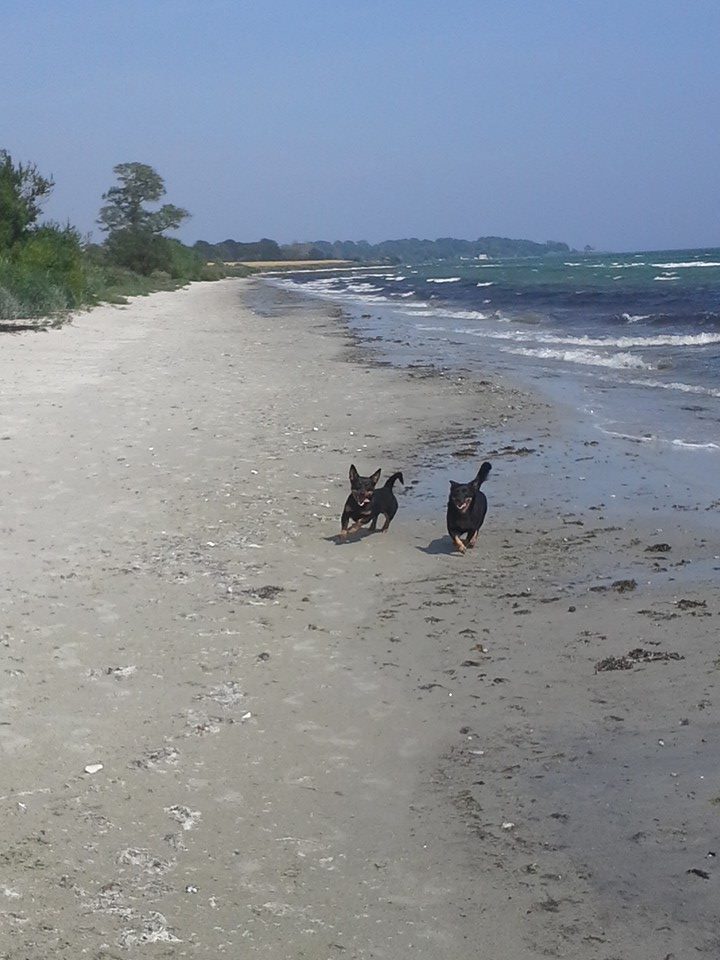
So what should a good Lancashire Heeler look like? It should look like a working dog, sturdy and strong for its size, between 10 and 12 inches. It should be balanced, slightly longer than tall at the withers and should have a high set tail, which it uses for balance. Movement should be free and brisk. The head should be workmanlike but not toyish and in expression should look intelligent. The coat should be weatherproof and there are two colours to be found: black and tan, and liver and tan.
In temperament it should be affectionate to its owner and show no aggression to people, though it will guard what it considers its own property. In spite of its small size this is not a breed that will manage on little or no activity. Like all farm dogs, they need exercise and mental stimulation and firm, but kind discipline at an early stage to prevent bad habits.
In the right home they make excellent pets as they do enjoy snoozing by the fire, preferably after a good walk and meal! And that about sums the breed up – unspoilt by its show status, it stays true to its roots as the nip’n’duck dog. Long may it continue!
Margaret McFarlane (DW breed note writer); photos by Lewis Bacutt, Maud Velders and Annette Marie Haugstead